logo
produits
EINZELHEITEN ZU DEN PRODUKTEN
Heim > Produits >
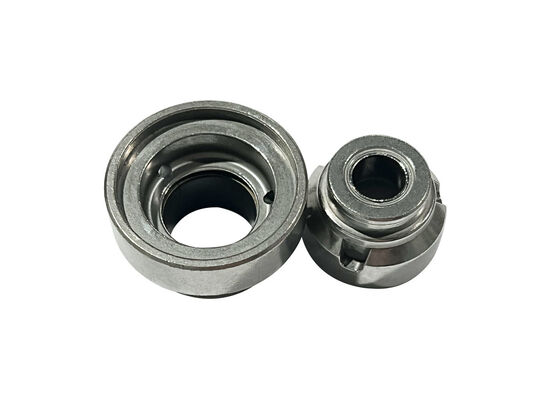
Steam-Treated Sintered Iron Rod Guide Shock Absorber Parts Fe-C-Cu Alloy with Anti-Wear Finish

Steam-Treated Sintered Iron Rod Guide Shock Absorber Parts Fe-C-Cu Alloy with Anti-Wear Finish

Mindestbestellmenge: 1000 Stück
Preis: negotiable
Standardverpackung: Standard-Exportpaket
Lieferfrist: 30 Werktage für neue Proben
Zahlungsmethode: T/T, Western Union
Lieferkapazität: 50.000 Stück pro Monat
Detailinformationen
Herkunftsort
NINGBO, CHINA
Markenname
XIAYI
Zertifizierung
IATF16949:2016
Modellnummer
XYJD-PM0407P
Produktname:
Sinterstange guider
Material:
Fe-C-Cu
Drücken:
150T
Service:
OEM
Anwendung:
Stoßdämpfer
Behandlung:
Dampf
Härte:
HRB70-90
Form-Zeit:
25 Tage
Produktbeschreibung
Product Overview

The Steam-Treated Sintered Iron Rod Guide (Model XY-GUI08A) is a precision-engineered shock absorber component manufactured from Fe-C-Cu powder metallurgy alloy. Designed for demanding suspension applications, this rod guider features a steam treatment finish that seals surface porosity, enhances corrosion resistance, and ensures a clean, burr-free appearance. With an operating temperature range from -200C to +600C, it delivers reliable performance in extreme environments from cryogenic industrial systems to high-temperature engine compartments.

Engineered for dry working conditions, the component provides maintenance-free operation without external lubrication, making it ideal for sealed damper assemblies and applications where oil contamination must be avoided. IATF 16949:2016 certified manufacturing processes guarantee consistent quality for OEM and aftermarket supply chains worldwide.

Technical Specifications
ParameterSpecification
Model NumberXY-GUI08A
TypePowder Metallurgy Parts
Product TypeNon-Standard / Customized Product
MaterialFe-C-Cu (Iron-Copper-Carbon Alloy)
Density6.0 - 6.7 g/cm3
Surface HardnessHRC 28-32 / HRC 40-44 / HRC 58-62 (selectable)
Surface FinishSteam Treatment, Anti-Rust, Heat Treatment, Polishing, Coating
Machining ProcessShaping, Shaving, Grinding, CNC Machining
Operating Temperature-200C to +600C
Applicable StandardsGB / ISO / DIN / JIS / AGMA
PositionFront (Oil-Filled Shock Absorber)
Quoted Condition2D / 3D Drawing / Physical Sample
Key Features and Benefits Steam Treatment Technology
  • Surface Porosity Sealing: The controlled steam oxidation process forms a dense Fe3O4 (magnetite) layer inside interconnected pores, effectively sealing the surface. This eliminates fluid leakage paths in oil-filled shock absorbers and prevents internal contamination.
  • Enhanced Corrosion Resistance: The uniform magnetite coating provides outstanding rust protection, surpassing standard phosphate or oil-only treatments critical for under-chassis components exposed to road salt, moisture, and debris.
  • Clean Burr-Free Finish: Post-steam treatment processing removes all surface burrs, delivering a smooth, aesthetically clean component ready for direct assembly without additional cleaning or deburring steps.
Extreme Temperature Performance
  • Cryogenic to High-Heat Range: The Fe-C-Cu alloy and steam-treated surface maintain structural integrity and dimensional stability across an extraordinary temperature span of -200C to +600C far exceeding conventional elastomeric or polymer-based guides.
  • No Thermal Degradation: Unlike plastic or rubber guide components that soften, crack, or degrade under extreme heat or cold, the sintered iron guide retains its mechanical properties and precise geometry throughout the entire temperature envelope.
Wear Resistance and Long Service Life
  • Low Friction Coefficient: Smooth and consistent friction characteristics with zero stick-slip effects, ensuring stable damper response even after millions of cycles.
  • High Load Capacity: Suitable for high static and dynamic loads, with surface hardness selectable from HRC 28-32 (machinable) to HRC 58-62 (maximum wear resistance) depending on application requirements.
  • Dry Running Capability: Functions reliably under dry working conditions without external lubrication, making it ideal for maintenance-free sealed assemblies and reducing total cost of ownership.
  • Impact and Edge Load Tolerance: Engineered to withstand dirt ingress, shock impacts, and edge loading common in off-road and heavy-duty vehicle suspension systems.
Manufacturing Excellence
CapabilityDetails
Press TonnageAutomatic Hydraulic and Mechanical Presses up to 150T
SinteringVacuum Furnaces and Controlled-Atmosphere Sintering Furnaces
Surface TreatmentSteam Treatment, Anti-Rust, Heat Treatment, Polishing, Plating
Secondary OperationsShaping, Shaving, Grinding, CNC Machining
In-House ToolingCNC Tooling Machine, EDM, Wire Cutting
R&D CapacityDedicated engineering team developing multiple new items annually across diverse industries
Quality Assurance
Inspection EquipmentCapability
Three-Coordinate Measuring Machine (CMM)Full 3D geometric dimensional verification with micron-level accuracy
Optical Image InstrumentNon-contact profile measurement for complex contours and surface features
Metallurgical MicroscopeMicrostructure evaluation, porosity distribution, and phase analysis
Digital Hardness TesterRockwell (HRC) and microhardness verification across all surface treatments
Density Measurement EquipmentArchimedes principle density verification per MPIF Standard 42
Universal Tensile Testing MachineCrushing strength, radial crush, and mechanical property validation
Spectral Analysis EquipmentChemical composition verification of raw powder and finished components
Product Range
CategoryTypical Applications
Automotive PartsShock absorber rod guides, pistons, valve bodies, spring seats
Motorcycle PartsFront fork guides, rear damper pistons, rebound components
Engine PartsSintered rotors, valve train components, bearing retainers
Power Tool PartsGears, bushings, structural housings, bearing sleeves
Hydraulic and Compressor PartsWear plates, thrust washers, seal rings, cylinder liners
Home Appliance and Office EquipmentPrecision sintered gears, sleeves, spacers, timing pulleys
Textile and Sewing MachinerySmall complex bronze and iron sintered components with tight tolerances
Competitive Advantages
AdvantageDetails
Industry ExperienceMany years specializing in powder metallurgy; comprehensive product portfolio across multiple industries
Integrated ManufacturingFrom powder pressing to finished surface treatment; in-house tooling, polishing, and plating workshops ensure quality control and schedule adherence
CertificationsISO 9001:2008, RoHS, SGS compliant; IATF 16949:2016 certified for automotive quality management
Quality DocumentationDimensional reports, chemical composition certificates, and mechanical property test data provided with every order
Raw Material ControlSpectral and thermal analysis of raw powders and liquid melt; batch verification before mixing to ensure chemistry consistency
Logistics AdvantageNear sea port and airport for efficient international shipping; flexible MOQ starting from 1,000 pcs
Frequently Asked Questions
Q: What is steam treatment and why is it important for sintered shock absorber components?
Steam treatment is a controlled oxidation process performed at approximately 500-560C in a superheated steam atmosphere. The steam reacts with the iron surface to form a uniform, adherent Fe3O4 (magnetite) layer that seals the interconnected porosity inherent in powder metallurgy parts. For shock absorber rod guides, this provides three critical benefits: (1) it prevents hydraulic oil from seeping through the porous structure, maintaining damper pressure integrity; (2) the magnetite coating delivers excellent corrosion resistance superior to standard oil-only preservation; and (3) it produces a clean, aesthetically pleasing blue-black finish free of surface burrs. The process also moderately increases surface hardness and compressive strength.
Q: Can this rod guide really operate from -200C to +600C? What makes this possible?
Yes. Unlike polymer-based or elastomeric guide components that degrade at temperature extremes, our sintered Fe-C-Cu alloy rod guide is an all-metal component. The iron-copper-carbon material system maintains its mechanical properties including hardness, tensile strength, and dimensional stability across this entire temperature range. The steam-treated magnetite surface layer is thermally stable and does not peel, crack, or decompose at high temperatures. This makes the guide suitable for cryogenic industrial dampers, Arctic vehicle suspensions, and high-temperature applications such as engine-mounted damper assemblies near exhaust systems or in heavy industrial machinery operating in extreme environments.
Q: What surface hardness options are available, and how do I choose the right one?
We offer three standard surface hardness grades: HRC 28-32 (as-sintered, suitable for applications requiring post-sinter machining or where ductility is prioritized), HRC 40-44 (medium-hard, a balanced option for general automotive shock absorber applications), and HRC 58-62 (maximum wear resistance, recommended for heavy-duty, high-cycle, or abrasive environments). The selection depends on your specific operating conditions contact load, sliding velocity, mating surface material, and expected service life. Our application engineers can recommend the optimal grade based on your technical requirements and duty cycle.
Q: Can you customize the rod guide dimensions and geometry for non-standard shock absorber designs?
Absolutely. This product is classified as a non-standard/custom component. We manufacture to your exact specifications using 2D drawings, 3D CAD models (STEP, IGES, or native formats), or physical reference samples. Our in-house CNC tooling department can produce custom compaction tooling with lead times of approximately 25 days for new mold fabrication. We also provide Design-for-Powder Metallurgy (DFPM) consultation to optimize your geometry for manufacturability potentially improving part performance while reducing tooling costs through design refinements.
Q: What is the difference between steam treatment and other surface finishes you offer?
We provide a complete range of surface treatments tailored to different performance requirements. Steam treatment (Fe3O4 magnetite layer) excels at porosity sealing, corrosion resistance, and clean appearance ideal for oil-filled dampers. Anti-rust oil treatment is a cost-effective option for short-term storage protection. Heat treatment (carbonitriding, induction hardening) maximizes surface hardness for extreme wear conditions. Polishing achieves superior surface finish for low-friction requirements. Electroplating or coating treatments (zinc, zinc-nickel, manganese phosphate) provide enhanced corrosion protection for externally exposed components. Our engineering team can recommend the optimal treatment based on your environmental conditions and performance specifications.
Q: How do you ensure consistent quality across production batches, especially for customized parts?
Quality consistency is achieved through multiple layers of control. Raw material: every powder batch undergoes spectral analysis before mixing, verifying chemical composition against specification. In-process: density, dimensions, and hardness are monitored using SPC (Statistical Process Control) methods throughout the production run. Final inspection: each shipment includes a comprehensive quality package dimensional reports (CMM), material certification (OES), hardness test results, and visual inspection records. For new program launches, we provide full PPAP Level 3 documentation (PFMEA, Control Plan, MSA, capability studies with Ppk/Cpk). ISO 9001:2008 and IATF 16949:2016 certifications underpin our entire quality management system.
produits
EINZELHEITEN ZU DEN PRODUKTEN
Steam-Treated Sintered Iron Rod Guide Shock Absorber Parts Fe-C-Cu Alloy with Anti-Wear Finish
Mindestbestellmenge: 1000 Stück
Preis: negotiable
Standardverpackung: Standard-Exportpaket
Lieferfrist: 30 Werktage für neue Proben
Zahlungsmethode: T/T, Western Union
Lieferkapazität: 50.000 Stück pro Monat
Detailinformationen
Herkunftsort
NINGBO, CHINA
Markenname
XIAYI
Zertifizierung
IATF16949:2016
Modellnummer
XYJD-PM0407P
Produktname:
Sinterstange guider
Material:
Fe-C-Cu
Drücken:
150T
Service:
OEM
Anwendung:
Stoßdämpfer
Behandlung:
Dampf
Härte:
HRB70-90
Form-Zeit:
25 Tage
Min Bestellmenge:
1000 Stück
Preis:
negotiable
Verpackung Informationen:
Standard-Exportpaket
Lieferzeit:
30 Werktage für neue Proben
Zahlungsbedingungen:
T/T, Western Union
Versorgungsmaterial-Fähigkeit:
50.000 Stück pro Monat
Produktbeschreibung
Product Overview

The Steam-Treated Sintered Iron Rod Guide (Model XY-GUI08A) is a precision-engineered shock absorber component manufactured from Fe-C-Cu powder metallurgy alloy. Designed for demanding suspension applications, this rod guider features a steam treatment finish that seals surface porosity, enhances corrosion resistance, and ensures a clean, burr-free appearance. With an operating temperature range from -200C to +600C, it delivers reliable performance in extreme environments from cryogenic industrial systems to high-temperature engine compartments.

Engineered for dry working conditions, the component provides maintenance-free operation without external lubrication, making it ideal for sealed damper assemblies and applications where oil contamination must be avoided. IATF 16949:2016 certified manufacturing processes guarantee consistent quality for OEM and aftermarket supply chains worldwide.

Technical Specifications
ParameterSpecification
Model NumberXY-GUI08A
TypePowder Metallurgy Parts
Product TypeNon-Standard / Customized Product
MaterialFe-C-Cu (Iron-Copper-Carbon Alloy)
Density6.0 - 6.7 g/cm3
Surface HardnessHRC 28-32 / HRC 40-44 / HRC 58-62 (selectable)
Surface FinishSteam Treatment, Anti-Rust, Heat Treatment, Polishing, Coating
Machining ProcessShaping, Shaving, Grinding, CNC Machining
Operating Temperature-200C to +600C
Applicable StandardsGB / ISO / DIN / JIS / AGMA
PositionFront (Oil-Filled Shock Absorber)
Quoted Condition2D / 3D Drawing / Physical Sample
Key Features and Benefits Steam Treatment Technology
  • Surface Porosity Sealing: The controlled steam oxidation process forms a dense Fe3O4 (magnetite) layer inside interconnected pores, effectively sealing the surface. This eliminates fluid leakage paths in oil-filled shock absorbers and prevents internal contamination.
  • Enhanced Corrosion Resistance: The uniform magnetite coating provides outstanding rust protection, surpassing standard phosphate or oil-only treatments critical for under-chassis components exposed to road salt, moisture, and debris.
  • Clean Burr-Free Finish: Post-steam treatment processing removes all surface burrs, delivering a smooth, aesthetically clean component ready for direct assembly without additional cleaning or deburring steps.
Extreme Temperature Performance
  • Cryogenic to High-Heat Range: The Fe-C-Cu alloy and steam-treated surface maintain structural integrity and dimensional stability across an extraordinary temperature span of -200C to +600C far exceeding conventional elastomeric or polymer-based guides.
  • No Thermal Degradation: Unlike plastic or rubber guide components that soften, crack, or degrade under extreme heat or cold, the sintered iron guide retains its mechanical properties and precise geometry throughout the entire temperature envelope.
Wear Resistance and Long Service Life
  • Low Friction Coefficient: Smooth and consistent friction characteristics with zero stick-slip effects, ensuring stable damper response even after millions of cycles.
  • High Load Capacity: Suitable for high static and dynamic loads, with surface hardness selectable from HRC 28-32 (machinable) to HRC 58-62 (maximum wear resistance) depending on application requirements.
  • Dry Running Capability: Functions reliably under dry working conditions without external lubrication, making it ideal for maintenance-free sealed assemblies and reducing total cost of ownership.
  • Impact and Edge Load Tolerance: Engineered to withstand dirt ingress, shock impacts, and edge loading common in off-road and heavy-duty vehicle suspension systems.
Manufacturing Excellence
CapabilityDetails
Press TonnageAutomatic Hydraulic and Mechanical Presses up to 150T
SinteringVacuum Furnaces and Controlled-Atmosphere Sintering Furnaces
Surface TreatmentSteam Treatment, Anti-Rust, Heat Treatment, Polishing, Plating
Secondary OperationsShaping, Shaving, Grinding, CNC Machining
In-House ToolingCNC Tooling Machine, EDM, Wire Cutting
R&D CapacityDedicated engineering team developing multiple new items annually across diverse industries
Quality Assurance
Inspection EquipmentCapability
Three-Coordinate Measuring Machine (CMM)Full 3D geometric dimensional verification with micron-level accuracy
Optical Image InstrumentNon-contact profile measurement for complex contours and surface features
Metallurgical MicroscopeMicrostructure evaluation, porosity distribution, and phase analysis
Digital Hardness TesterRockwell (HRC) and microhardness verification across all surface treatments
Density Measurement EquipmentArchimedes principle density verification per MPIF Standard 42
Universal Tensile Testing MachineCrushing strength, radial crush, and mechanical property validation
Spectral Analysis EquipmentChemical composition verification of raw powder and finished components
Product Range
CategoryTypical Applications
Automotive PartsShock absorber rod guides, pistons, valve bodies, spring seats
Motorcycle PartsFront fork guides, rear damper pistons, rebound components
Engine PartsSintered rotors, valve train components, bearing retainers
Power Tool PartsGears, bushings, structural housings, bearing sleeves
Hydraulic and Compressor PartsWear plates, thrust washers, seal rings, cylinder liners
Home Appliance and Office EquipmentPrecision sintered gears, sleeves, spacers, timing pulleys
Textile and Sewing MachinerySmall complex bronze and iron sintered components with tight tolerances
Competitive Advantages
AdvantageDetails
Industry ExperienceMany years specializing in powder metallurgy; comprehensive product portfolio across multiple industries
Integrated ManufacturingFrom powder pressing to finished surface treatment; in-house tooling, polishing, and plating workshops ensure quality control and schedule adherence
CertificationsISO 9001:2008, RoHS, SGS compliant; IATF 16949:2016 certified for automotive quality management
Quality DocumentationDimensional reports, chemical composition certificates, and mechanical property test data provided with every order
Raw Material ControlSpectral and thermal analysis of raw powders and liquid melt; batch verification before mixing to ensure chemistry consistency
Logistics AdvantageNear sea port and airport for efficient international shipping; flexible MOQ starting from 1,000 pcs
Frequently Asked Questions
Q: What is steam treatment and why is it important for sintered shock absorber components?
Steam treatment is a controlled oxidation process performed at approximately 500-560C in a superheated steam atmosphere. The steam reacts with the iron surface to form a uniform, adherent Fe3O4 (magnetite) layer that seals the interconnected porosity inherent in powder metallurgy parts. For shock absorber rod guides, this provides three critical benefits: (1) it prevents hydraulic oil from seeping through the porous structure, maintaining damper pressure integrity; (2) the magnetite coating delivers excellent corrosion resistance superior to standard oil-only preservation; and (3) it produces a clean, aesthetically pleasing blue-black finish free of surface burrs. The process also moderately increases surface hardness and compressive strength.
Q: Can this rod guide really operate from -200C to +600C? What makes this possible?
Yes. Unlike polymer-based or elastomeric guide components that degrade at temperature extremes, our sintered Fe-C-Cu alloy rod guide is an all-metal component. The iron-copper-carbon material system maintains its mechanical properties including hardness, tensile strength, and dimensional stability across this entire temperature range. The steam-treated magnetite surface layer is thermally stable and does not peel, crack, or decompose at high temperatures. This makes the guide suitable for cryogenic industrial dampers, Arctic vehicle suspensions, and high-temperature applications such as engine-mounted damper assemblies near exhaust systems or in heavy industrial machinery operating in extreme environments.
Q: What surface hardness options are available, and how do I choose the right one?
We offer three standard surface hardness grades: HRC 28-32 (as-sintered, suitable for applications requiring post-sinter machining or where ductility is prioritized), HRC 40-44 (medium-hard, a balanced option for general automotive shock absorber applications), and HRC 58-62 (maximum wear resistance, recommended for heavy-duty, high-cycle, or abrasive environments). The selection depends on your specific operating conditions contact load, sliding velocity, mating surface material, and expected service life. Our application engineers can recommend the optimal grade based on your technical requirements and duty cycle.
Q: Can you customize the rod guide dimensions and geometry for non-standard shock absorber designs?
Absolutely. This product is classified as a non-standard/custom component. We manufacture to your exact specifications using 2D drawings, 3D CAD models (STEP, IGES, or native formats), or physical reference samples. Our in-house CNC tooling department can produce custom compaction tooling with lead times of approximately 25 days for new mold fabrication. We also provide Design-for-Powder Metallurgy (DFPM) consultation to optimize your geometry for manufacturability potentially improving part performance while reducing tooling costs through design refinements.
Q: What is the difference between steam treatment and other surface finishes you offer?
We provide a complete range of surface treatments tailored to different performance requirements. Steam treatment (Fe3O4 magnetite layer) excels at porosity sealing, corrosion resistance, and clean appearance ideal for oil-filled dampers. Anti-rust oil treatment is a cost-effective option for short-term storage protection. Heat treatment (carbonitriding, induction hardening) maximizes surface hardness for extreme wear conditions. Polishing achieves superior surface finish for low-friction requirements. Electroplating or coating treatments (zinc, zinc-nickel, manganese phosphate) provide enhanced corrosion protection for externally exposed components. Our engineering team can recommend the optimal treatment based on your environmental conditions and performance specifications.
Q: How do you ensure consistent quality across production batches, especially for customized parts?
Quality consistency is achieved through multiple layers of control. Raw material: every powder batch undergoes spectral analysis before mixing, verifying chemical composition against specification. In-process: density, dimensions, and hardness are monitored using SPC (Statistical Process Control) methods throughout the production run. Final inspection: each shipment includes a comprehensive quality package dimensional reports (CMM), material certification (OES), hardness test results, and visual inspection records. For new program launches, we provide full PPAP Level 3 documentation (PFMEA, Control Plan, MSA, capability studies with Ppk/Cpk). ISO 9001:2008 and IATF 16949:2016 certifications underpin our entire quality management system.
宁波夏亿机电科技有限公司